

EV Charger Installation for Home & Property Charging
A Level 2 charger can make home charging significantly more practical, but the charger is only one part of the installation.
J.I.C. Electric can evaluate the charger location, circuit requirements and available electrical capacity before installing the electrical infrastructure needed for compatible EV charging equipment.
Which of These Sounds Like Your Situation?
Most charging installations start from one of these. Your selection carries into the request below.
You just bought an EV
The first real question is whether the property can support charging, and what it takes to do it properly.
- ✓Available capacity checked against the existing service
- ✓Charger location and cable routing reviewed
- ✓Circuit sized for the equipment you actually bought
Tell us the vehicle and the charger, if you have picked one.
Charging on a regular outlet is too slow
A standard 120V outlet works, barely. A dedicated 240V circuit is the usual upgrade.
- ✓Daily driving compared against practical charging
- ✓Dedicated 240V circuit for the equipment
- ✓Existing circuit relieved of a load it was not built for
Mention your typical daily mileage.
Installing a Level 2 charger
Hardwired or receptacle-fed, the electrical requirements come from the equipment specifications.
- ✓Hardwired or NEMA configuration per the equipment
- ✓Breaker and conductor sizing to the listed requirements
- ✓Disconnect and protection where required
Send the charger model and its installation manual if you have it.
The garage needs a dedicated circuit
Garage circuits are frequently shared with other loads, which is exactly what charging should not do.
- ✓New dedicated circuit from the panel
- ✓Routing planned around the garage layout
- ✓Other garage equipment considered in the load
Note what else runs in the garage.
You are not sure the panel can handle it
This is the right question to ask before buying equipment. A load calculation answers it.
- ✓Existing service and measured load evaluated
- ✓Options if capacity is short: circuit, subpanel or service upgrade
- ✓Honest answer rather than an assumed upgrade
A photo of the panel and its label speeds this up.
Relocating or replacing a charger
Moving a charger, changing equipment or adding a second one is its own small project.
- ✓Existing circuit evaluated for the new equipment
- ✓New routing and mounting location planned
- ✓Capacity re-checked if a second charger is added
Tell us where it is now and where you want it.
What an EV Charging Installation Involves
The scope is the electrical infrastructure: capacity, circuit, routing, mounting and connection for compatible charging equipment.
Capacity Evaluation
Existing service, measured load and panel condition reviewed before any installation is committed to.
Load Calculation
Charging load added to the property’s existing load to confirm the service can carry it.
Dedicated Circuit Installation
A dedicated 240V circuit sized to the charging equipment’s listed requirements.
Dedicated 120V & 240V Circuits →Hardwired or Receptacle Connection
Hardwired connection or an appropriate NEMA receptacle configuration, depending on the equipment.
Charger Location & Mounting
Mounting position planned around the parking position, cable length and how the garage is used.
Conduit & Cable Routing
Routing planned for the actual building — garage walls, attic, crawlspace, exterior or detached structures.
Panel Work Where Required
Breaker, panel space or subpanel work needed to land the circuit properly.
Panel & Service Upgrades →Permit & Inspection
Permitted and inspected installation where the jurisdiction requires it.
EV-Ready Infrastructure
Circuit and capacity roughed for future charging during construction or a remodel.
New Construction Electrical →
Configurations That Come Up Most
Charging equipment varies, and so does the right electrical approach for a given property.
- —Charger connected directly to a dedicated circuit — common where the equipment is permanent, outdoors, or a receptacle is not preferred.
- —A NEMA 14-50 or similar configuration where the equipment is listed for plug connection and may be moved or replaced later.
- —Manufacturer-specific wall connectors installed to the equipment’s own electrical requirements.
- —Feeder and possibly a subpanel, sized for the run distance to the structure.
- —Two circuits, or equipment that shares capacity — decided by the available service, not preference.
- —Conduit, capacity and panel space installed now for equipment purchased later.
Circuit sizing follows the equipment’s listed requirements. J.I.C. does not publish charging-speed claims; the final configuration is confirmed against your equipment and panel.
What J.I.C. Checks Before Installing
Most EV installation problems are capacity or location problems, and both are cheaper to find before the work starts.
- 1Decides feasibility
Available capacity
Service rating, measured load and panel condition — the honest picture, not the label.
- 2From the manual
Equipment requirements
The charger’s listed circuit, breaker and connection requirements drive the design.
- 3Practical fit
Charger placement
Where the car actually parks, which side the port is on, and how far the cable reaches.
- 4Access
Routing
How the circuit gets from the panel to the charger, and what has to be opened to do it.
- 5Planning ahead
Future loads
A second vehicle, a heat pump or an ADU later — worth accounting for while the panel is open.
- 6Compliance
Permit path
Jurisdiction requirements for your address, including inspection.
The charger is the easy part
Charging equipment is straightforward to mount. What decides whether the installation is any good is the capacity evaluation, the circuit sizing and the routing — which is where approximately 20 years of residential electrical work matters.
Charger work is panel work first. These two projects show both halves — a new build where the garage was pre-wired for a future charger, and a rewire where the service had to be replaced before any new load could be added.
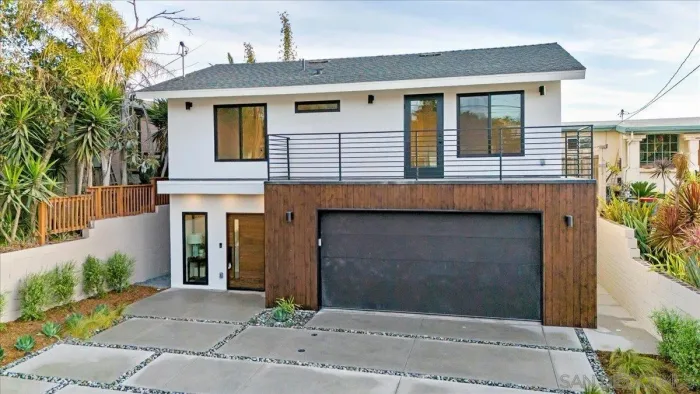
Ground-up two-story home
- Property / project type
- Two-story single-family new construction with attached garage
- Electrical challenge
- Splitting lighting and appliance loads cleanly across two floors on one service
- Scope of work
- Underground service and meter, load-calculated panel, full rough-in, recessed and fan layout, garage subfeed with EV provision, smoke and CO coverage
- Result
- Passed final inspection; garage pre-wired for a future vehicle charger

1920s bungalow whole-home rewire
- Property / project type
- 1920s Spanish bungalow
- Electrical challenge
- Original cloth-insulated branch wiring plus decades of added-on circuits
- Scope of work
- Whole-home rewire, service and main panel upgrade, recessed lighting on dimmers, GFCI and AFCI protection to current code, exterior receptacles and lighting
- Result
- Plaster opened and patched only where required; labeled panel at final
EV Charging Questions
Can my existing panel support an EV charger?+
Sometimes yes, sometimes no. A load calculation on the existing service plus the charging load answers it, and that evaluation comes before any installation is promised.
Do I need a 240V circuit?+
Level 2 charging equipment requires a 240V circuit. A 120V outlet can charge a vehicle slowly, which suits some driving patterns and not others.
Should the charger be hardwired or plugged in?+
It depends on the equipment listing, the location, and whether you want the flexibility to swap equipment later. Both are normal.
Can you install a charger in a detached garage?+
Yes. That usually means a feeder sized for the run, and sometimes a subpanel at the structure.
Do you install the charger itself, or just the wiring?+
J.I.C. installs the electrical infrastructure and connects compatible charging equipment. Equipment supply and any manufacturer registration remain the owner’s choice.
Is a permit required?+
EV charging circuits are generally permitted and inspected work. Requirements are confirmed for your jurisdiction.
Planning an EV Charger Installation?
You do not have to select the service again — this request arrives tagged as EV charger installation. A panel photo is the single most useful thing you can send.
- ✓Capacity verified before install is promised
- ✓Circuit sized to your equipment
- ✓Permit and inspection handled where required